
Reducing Mold in Cheese Maturation: An Airocide Case Study
Airocide Far-222 (Visium) — Airocide Systems is an authorized distributor of Visium by Lit Thinking


Introduction
Public Health students at Roger Williams University in Bristol, Rhode Island, conducted a year-long study evaluating the impact of Far-UVC technology on reducing airborne pathogen transmission.
Under the direction of Dr. Jacob Bueno de Mesquita, Associate Professor of Public Health, the team assessed Visium Far-UVC fixtures in a 572 sq. ft. classroom. Using the Wells-Riley model, their analysis found a substantial reduction in modeled infection risk when Far-UVC was applied.
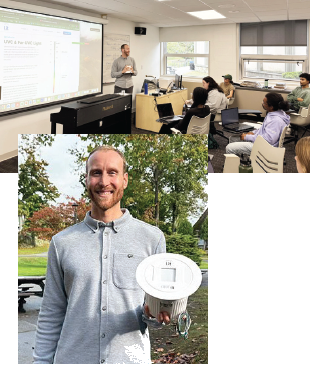
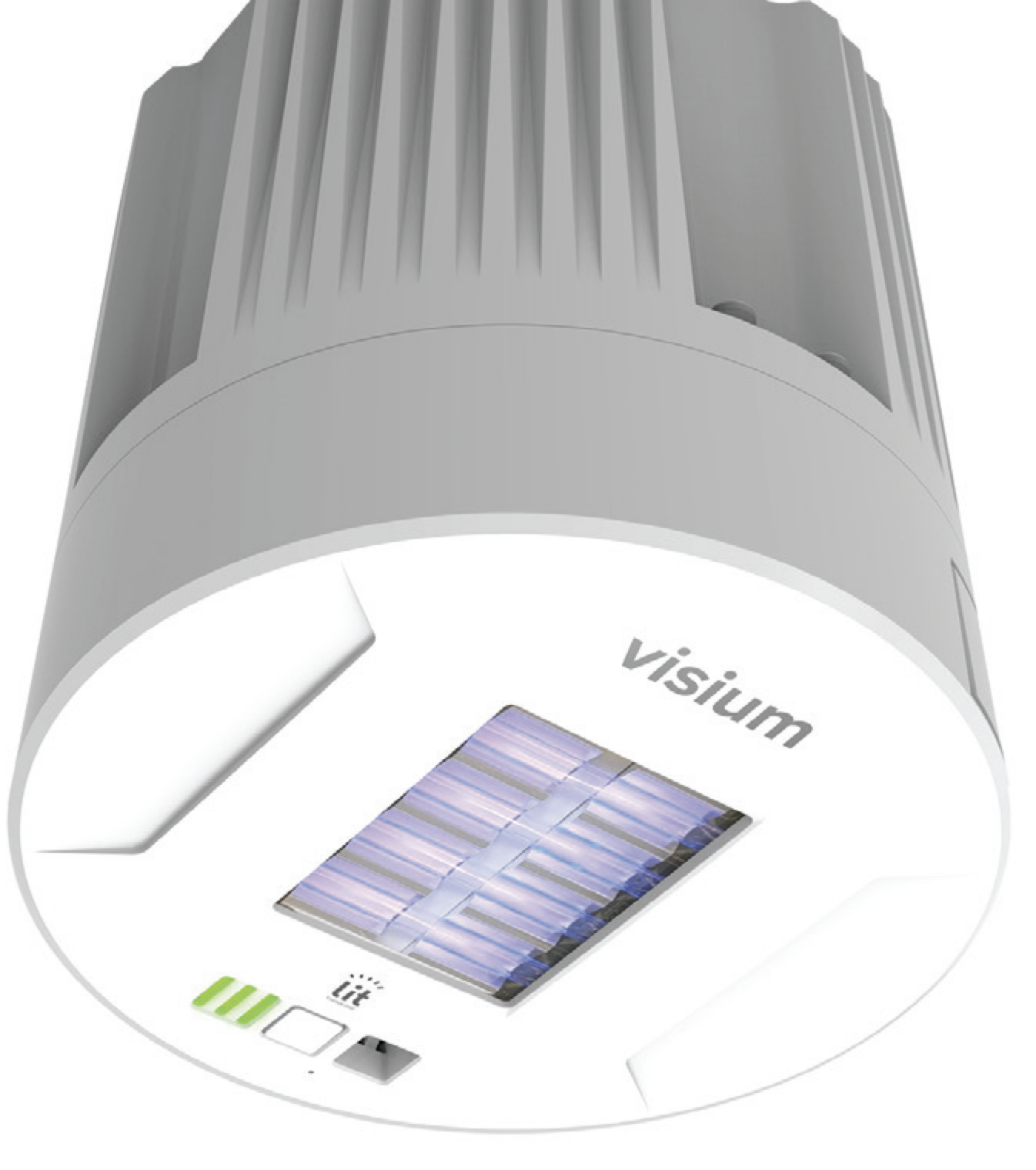
Visium Far-UVC light fixture with clear Ushio Care222 Kr-Cl Excimer Lamp Module.
The Study
The scenario modeled an 8-hour exposure period in a classroom containing an infectious “super-shedder”—someone emitting a high concentration of viral particles. Four ceiling-mounted Visium fixtures ran continuously throughout the day.
To evaluate occupant exposure to Far-UVC (222 nm), students used colorimetric dosimeters and radiometers.
Mitigating Mold in Cheese Maturation: A Case Study
Results showed:
- 90% whole-room inactivation of SARS-CoV-2 in under 4 minutes
- Infection risk over 8 hours:
With Far-UVC: 4%
Without Far-UVC: 45%
Visium fixtures operate silently at just 14 watts each. The four-device setup boosted the classroom's air cleaning capacity from 3 ACH (air changes per hour) to 39 eACH (equivalent air changes per hour):
- with no added noise
- virtually no visible light
- and minimal energy consumption
Operating the four fixtures continuously costs approximately $0.30/day.
Viral Control Effectiveness
*Using Wells-Riley model
*Risk reduced 41% compared with a decently ventilated space after 8 hr sharing the air.
For reference, the modeled infection risk at each air cleaning rate:
| Air Cleaning Rate | Infection Risk After 8 Hours |
|---|---|
| 3 ACH (7.1 L/s-p) | 45% |
| 10 ACH (23.8 L/s-p) | 16% |
| 39 eACH (92.9 eq L/s-p) | 4% |
Conclusion
Funded by a grant from Rhode Island INBRE for Biomedical Research Excellence, the study concluded that: “Far-UVC mitigates viral transmission at a level unparalleled by [traditional] airflow and filtration methods and should be deployed widely.”
Expert Commentary
“This was an exciting project that demonstrated a significant estimated reduction in airborne infection risk using Visium Far-UVC fixtures,” said Dr. P. Jacob Bueno de Mesquita. “[We have demonstrated] that Visium can transform high-risk indoor environments into safer spaces.”
Airocide Systems is an authorized distributor of Visium, manufactured by Lit Thinking.